
Why Your Core Might Be Holding You Back—Even If You’ve Never Had a Visible ‘Mummy Tummy’

You’re back to work. You’ve resumed workouts. You may even feel fitter than before. But something still doesn’t feel quite right.
Maybe your balance feels off.
Maybe your lower back aches more than it used to.
Or maybe you’re still leaking a little when you sneeze or carry your child.
And yet, when you look in the mirror, there’s no obvious “mummy tummy.” Everything looks… normal. So what’s going on?
At Orchard Clinic, we see many women who are surprised to learn that the root cause of their discomfort is hidden—a weakened or unrecovered core, often due to diastasis recti (DR). And it doesn’t always look the way you expect.
Diastasis Recti Isn’t Always Visible—But It’s Often Felt
Diastasis recti refers to the separation of the rectus abdominis muscles (the “six-pack”) during pregnancy. For some, this leaves behind a noticeable bulge or dome along the midline of the tummy. But for many others, the gap remains without any visible signs.
Instead, it shows up as:
- Lower back pain, especially when standing or walking for long periods
- Pelvic floor strain, such as bladder leaks or heaviness
- Poor posture or balance, especially during workouts
- Slower recovery from exercise, despite regular activity
These are subtle but important signs that your core isn’t functioning as it should—even if your tummy looks flat.
The Link Between Your Core and Everyday Movement
Your core does more than help you look toned. It plays a key role in:
- Stabilising your spine
- Supporting your pelvic floor
- Controlling how you breathe and move
When your core is weak or disconnected post-birth, your body begins to compensate in small ways, often overworking other muscles like your lower back, hips, or shoulders. Over time, this can lead to discomfort or even injury, especially for women juggling caregiving, work, and fitness routines.
Why Standard Workouts Don’t Always Help
You might be doing Pilates, HIIT, or strength training, and still feel like you’re not progressing the way you used to. That’s because not all exercises are suitable for a postnatal core, especially when underlying separation hasn’t been addressed properly.
In fact, some exercises can make it worse—tightening the outer abs while ignoring the deep muscles that need support. That’s where a structured, mummy-specific approach makes the difference.
How Orchard Clinic Supports Core Recovery—Beyond Aesthetics
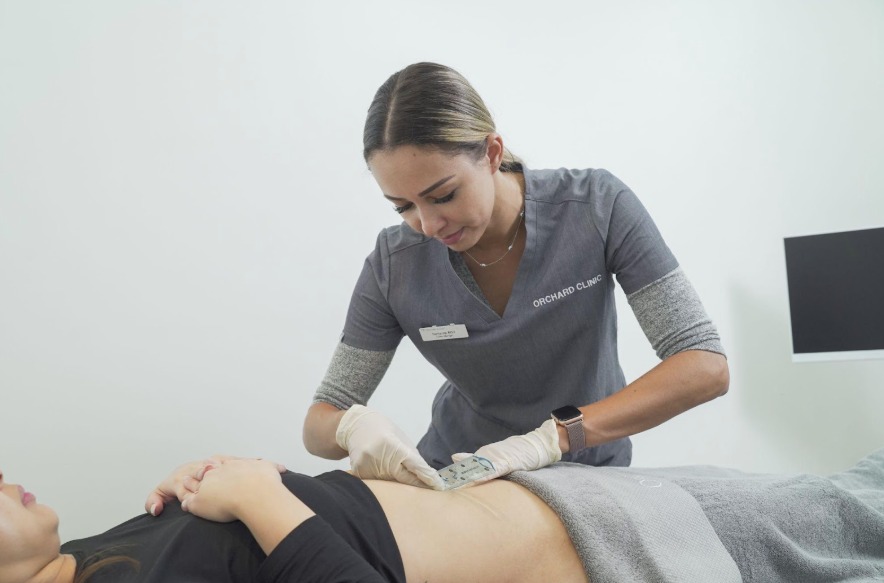
At Orchard Clinic, we look beneath the surface. Whether you have visible DR or not, we start with a detailed review of:
- Core muscle function and control
- Signs of hidden diastasis recti
- Posture, movement and breathing patterns
- Pelvic floor coordination
Depending on your needs, we may recommend:
- Embody to stimulate deep core muscles using HIFEM technology
- Floorwork to retrain core engagement and movement in daily life
- Pelvic floor integration, especially for women with co-existing incontinence or heaviness
Our focus isn’t just on what your body looks like—it’s on how well it works for you.
Even If Everything Looks Normal, You Deserve to Feel Better
If you’ve felt “off” since giving birth but weren’t sure why, your core might be holding you back more than you think.
You don’t need to wait for pain, injury or visible bulging to take action. Whether you’re newly postnatal or years past delivery, your body deserves a full check-in—and your core deserves the chance to work as it should.
Book An Appointment
Latest Articles



Parkway Parade
| Tue, Fri & Sat | 9:00AM – 6:00PM |
| Mon, Wed, Thu, Sun & PH | Closed |
Orchard
| Mon, Fri & Sat | 9:00AM – 6:00PM |
| Tue, Wed & Thu | 9:00AM – 8:00PM |
| Sun & PH | Closed |
Copyright © 2025 Orchard Clinic. All Rights Reserved. Privacy Policy